Right, well … I can’t start taking the car apart yet as it needs to stay on the road for the moment, so I’ve had to satisfy myself with cleaning things up. 
Before starting, I got hold of a Haynes manual for the Sierra from a local charity shop for 75p and a new gasket and seal set from an outfit on eBay called Main Train Transmissions Ltd. At twelve quid for the set, it’s not going to blow the budget. 

Parts included in the set are;
- A – Top cover gasket
- B & C – Spacer plate gaskets
- D – Release bearing guide gasket
- E – Bellhousing gasket
- F – Input shaft oil seal
- G – Speedometer drive oil seal
- H – Output shaft oil seal
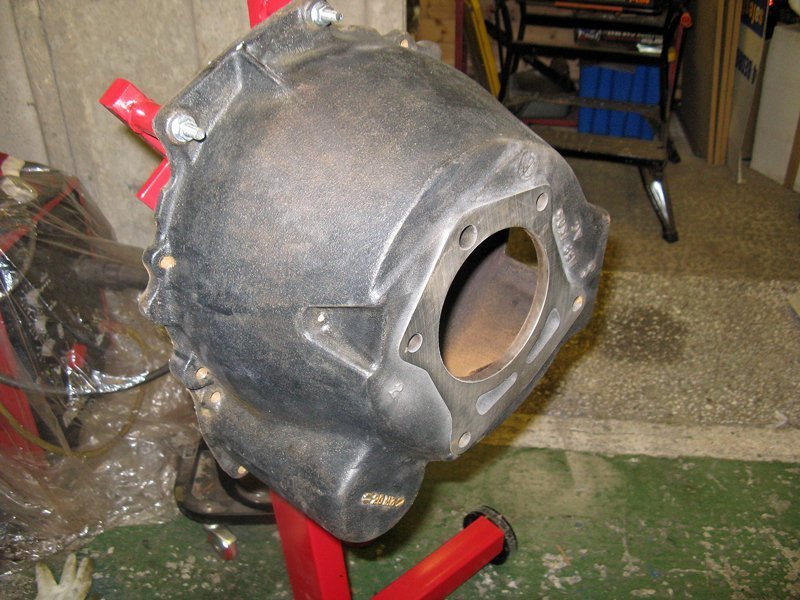
First off, I split the bellhousing from the gearbox so I could give it a damn good clean. Given the weight of these things, I’m not surprised the race boys splash the cash on lightweight alloy ones. 
Then it was a case of working my way round the rest of the gearbox, removing a good load of moss, mould, spiders, grease and gunk from the outside. As I went, I made sure to cover up the holes to stop me dropping a loose screw in there and not being able to get it out. 
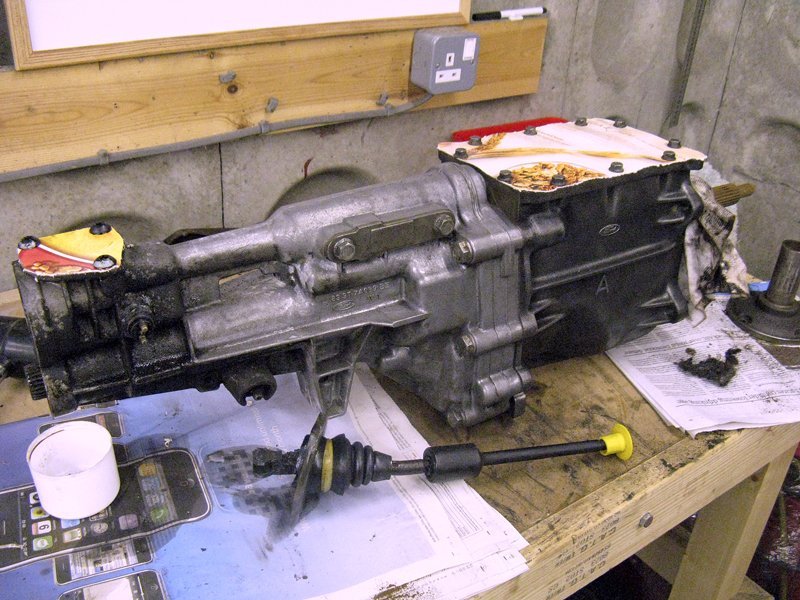
The inner workings of the gearbox are still a mystery to me, but spending some time playing about with it and seeing how things move at least gives me a beter idea of what’s going on.
As the box has had an unknown life and has been sitting around outside for a while, I thought it best to replace the oil seals. I admit, there’s an element of “don’t replace what you don’t know is buggered”, but I’d have to fill the box up with oil to find out anyway. The other side is that I’m just an inquisitive bugger and always like to have a poke at stuff. If nothing else, it means I now know where they are and what I’d need to do to replace them should they fail in the future.
First up is the output shaft seal, which is a bit of a bugger to get out, as the nice man at Ford used some kind of red glue to stick it in at the factory. 
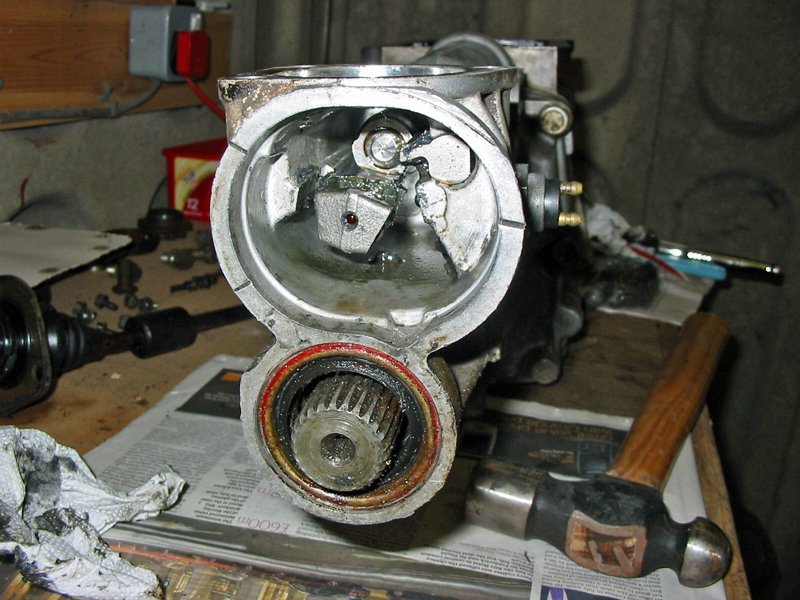
Next is the input shaft oil seal, which sits inside the release bearing guide…

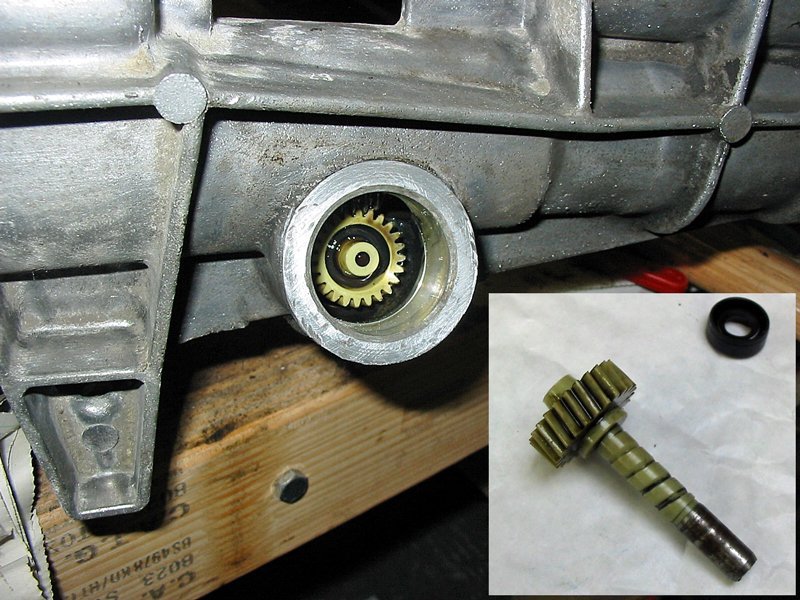
Then finally, the speedo drive oil seal. To get to this, you have to remove the bung one one side of the tailshaft housing, which enables you to pull the speedo drive out of its’ hole. This then means you can get at the oil seal on the other side of the housing. When you put the bung back in after fitting the new seal, make sure to test that turning the input shaft still results in the output shaft turning – if you press the bung in too tight, it will jam up the speedo drive and stop the output shaft turning.
So that’s basically it for the moment – everything’s cleaned up and ready for the next stage. I can’t honestly see any need to paint the various bits, as cast iron and alloy aren’t known for their rust, so that’s one less thing to do.